
Tee Work. Two dreaded words in a young baseball player's vocabulary.
More...
I remember going station to station during high school baseball practice and feeling underwhelmed by the work that I was getting in on the tee.
I mean, the ball's just sitting there - if I don't have the hand eye coordination to handle this by now then I may as well just give up.
So I'd go through the motions. Hit three to four dozen balls off the tee and move on to something more exciting like actual live pitching or at the very least soft toss.
This Was Me Being Dumb and Having Bad Coaches.
The truth is, knowing how to go about tee work is half the battle. And knowing the specifics of what you hope to accomplish during your work can go a long, long way.
MLB coaches and players know this, which is why they still do it on a daily basis, but especially during spring training when the pros are trying to get their swings back in check.
In this clip from the MLB Network, Curtis Granderson and Kevin Long (The former Yankees and now Mets' batting coach) break down some of the mistakes that Granderson made in the past during his tee work. They also touch upon what they hope to accomplish as they're getting their work in.
The Key Tee Work Takeaways
- Knowing where to place the tee, is just as important as knowing how to use it
- Trying to go the other way on a tee might not be possible depending on where you place it.
- Focus on getting to your "load" position in the most simple way possible. Avoid too much "dancing".
- Think up the middle and the other way, but swing naturally not worrying about trying to place it there.
And there you have it, simple tee work from a pro.
By the way, the Tee they are using in this video just so happens to be the tee that I recommend as one of my favorite hitting resources, here.

Doing Tee Work The Curtis Granderson Way
Tee Work. Two dreaded words in a young baseball player's vocabulary.
More...
I remember going station to station during high school baseball practice and feeling underwhelmed by the work that I was getting in on the tee.
I mean, the ball's just sitting there - if I don't have the hand eye coordination to handle this by now then I may as well just give up.
So I'd go through the motions. Hit three to four dozen balls off the tee and move on to something more exciting like actual live pitching or at the very least soft toss.
This Was Me Being Dumb and Having Bad Coaches.
The truth is, knowing how to go about tee work is half the battle. And knowing the specifics of what you hope to accomplish during your work can go a long, long way.
MLB coaches and players know this, which is why they still do it on a daily basis, but especially during spring training when the pros are trying to get their swings back in check.
In this clip from the MLB Network, Curtis Granderson and Kevin Long (The former Yankees and now Mets' batting coach) break down some of the mistakes that Granderson made in the past during his tee work. They also touch upon what they hope to accomplish as they're getting their work in.
The Key Tee Work Takeaways
- Knowing where to place the tee, is just as important as knowing how to use it
- Trying to go the other way on a tee might not be possible depending on where you place it.
- Focus on getting to your "load" position in the most simple way possible. Avoid too much "dancing".
- Think up the middle and the other way, but swing naturally not worrying about trying to place it there.
And there you have it, simple tee work from a pro.
By the way, the Tee they are using in this video just so happens to be the tee that I recommend as one of my favorite hitting resources, here.
editor's pick

latest video

news via inbox
Nulla turp dis cursus. Integer liberos euismod pretium faucibua
you might also like
- Get about ten players together (the more, the merrier), and divide them into two teams
- Starting on the foul line, have the two teams line their players up parallel to each other out into the outfield (like a long, five person cutoff throw) - have each player about 40 feet apart to start (depending on age and skill level).
- The ball starts at the foul line for both teams. When the coach gives the command, the race starts. Each player throws the ball as quickly as possible to the next person in the chain.
- IMPORTANT: Once the ball reaches the end, the race isn't over. The players then throw the ball back the other way and the foul line serves as the finish line.
- After each race, spread the player's out a little bit more. Make it a best of five.
- One thing that isn't mentioned in the video, but should be noted, is that you should hold the towel in between your index and middle finger like you would grip a baseball (minus the thumb). Don't hold it like you would if you were snapping a towel. Holding it properly helps mimic the finger action and extension that you want at the end of a pitch.
- Set Up a Tee just below Shoulder Height
- Thrower lines up next to tee square with hip, on one knee
- Have the player make throws without knocking his elbow on the tee
- Gather four players and arrange them in a square - each player is 20 feet apart
- A Coach will instruct the players which way the ball is to be thrown - clockwise, counter-clockwise, diagonal, or even by calling out player's names.
- Depending on which way the ball is moving (and which hand you throw with) you'll be working on short tosses including arm side flips (where the ball is flipped with your thumb pronated [turned down], underhand tosses, and "dart throws").
- Focus on quick hands, and accurate throws.
- Start slowly, but ramp up the speed as you go.
- You must keep your hands inside the baseball. If you let your hands drift out (having a long swing), you're going to get jammed or you're going to pull the ball foul.
- You still have to be able to get your arms extended. This means that you need to hit the ball out in front of the plate.
- You need to clear your hips early. This is part of rotational hitting which is something that I will go into depth on in another article.
- First off, you need a good eye. There's high heat, and then there's "this ball is up around my eyes" heat. Don't swing at balls out of the zone.
- Get your front foot down early. You need to be able to react quickly once you recognize that the ball is up. If you're foot is down, you're ready to pounce
- Work on timing the pitcher's fastball in the on deck circle. Get a feel for his rhythm and adjust your load and swing accordingly.
- Keep your swing short. Check out the drill below from Dead Red Hitting to help work on this.
- Speed
- Arm Strength
- Fielding Ability
- Hitting for Average
- Hitting for Power
- Stealing a base (or two)
- Taking an extra base on a single to right field (when runner is on first)
- Rattling the pitcher
- Scoring from 1st on a double
- Drawing pick off throws which can get away
- Scoring on a passed ball
- Staying out of double plays
- Hitting the ball hard
- Making contact often (not striking out)
- Hitting the ball on a line
- Using the whole field
Tell me if this sounds familiar.
You show up to the field an hour, maybe two, early for the game. You stretch, grab your glove, a ball, and start to play catch to warm up your arm.
Gradually, you back up to 90-120 feet, airing it out for a bit, and then you call it good. You're warmed up. But is there more that you could be doing?
More...
Yes. The answer is yes.
Obviously, there are more things you could be doing to not only warm up your arm, but at the same time, increasing accuracy, strength, and solidifying the fundamentals that make for strong, accurate throws on the field. But maybe you don't know any baseball throwing drills.
Well, now you do!
And if you put just a few of these into practice before games, or during your workouts, you'll be ahead of the competition.
1. Cutoff Throw Race
Objective: Quick Hands and Feet/Accuracy

There's nothing like a competition to get athletes focused - so whenever you can turn a throwing drill into a game, you're going to get better results.
This particular drill is great for working on quick hands and feet. Infielders should do this drill religiously, but it can also benefit outfielders as well. It basically goes like this:
A few suggestions: These types of games tend to work better when there's a punishment for the loser. Try windsprints, push-ups, or laps for the losing team.
2. Ready, Break, Throw - From One Knee
Objective: Mechanics/Balance
This throwing drill comes from DNA Sports, which has quite a range of options on their website, throughout multiple sports, for programs aimed at teaching kids the fundamentals and then some. Check 'em out!
Ready, break, throw, is a drill that can also be done from the standing position. The benefit to doing it from one knee is that it reinforces the power of using your upper body to really "finish" the throw.
In addition, it helps reinforce keeping a centered balance through the throw. If you get out of line in this drill, you'll fall to one side or another. This one's really good for kids.
3. Long Toss for Developing Better Velocity
Objective: Arm Strength & Flexibility
Jaeger Sports definitely knows what they're talking about when it comes to improving velocity and overall throwing mechanics. Thats' why I'm all ears when it comes to their long toss program (and you should be too).
Two things that stick out to me in this video/program are the distance at which they're playing catch, and also how much of an arc they are throwing the ball with.
When I would play long toss in the past, I never would do so at this long of a distance (I'm not sure I can throw that far, honestly), nor would I do so in such a loose manner. The idea in this throwing drill, of keeping your arm loose and arcing the ball more and more as you move back makes a lot of sense.
It allows you to really lengthen your throwing motion. And lengthening your motion = more velocity.
If you like this video, check out some of their other programs:
4. The Towel Drill
Objective: Mechanics
I like this throwing drill for pitchers quite a bit - and for a few different reasons. It comes from Tom House, former MLB pitcher and founder of The National Pitching Association.
It's a fantastic drill for working on your throwing form without having to actually stress your arm by throwing real pitches.
It helps keep your body in line, and your throwing motion extended (with your release point further out).
By the way, if you're in Southern California, Tom and the NPA have Daily (Yes Daily) open workouts at USC. They're not cheap, but well worth it if you, or your child, are serious about pitching. If I could have gotten pro instruction like that when I was a kid I would have been in heaven.
5. The One Knee Tee Drill
Objective: Correct Elbow Position

When was the last time you really thought about your throwing mechanics? Do you know where your elbow is in relation to your shoulder during your throwing motion? If it's below your shoulder, you've got a problem.
Sometimes this is really easy to spot in kids, because it makes it seem like they're pushing the ball and not throwing it (because they are).
It's less noticeable in higher level players, but equally devastating. It puts extra strain on the arm and saps the throw of power. If this problem goes uncorrected for a long time, you can end up with a pretty bad arm injury.
I know this because I'm a victim! I've been a middle infielder my whole life, so making short quick throws is what I did. Unfortunately, this trained me in the bad habit of keeping my elbow too low in my motion. The result? Rotator cuff issues, bursitis, and pain when I throw.
Watch the entire video over at Ripken Baseball (a great resource).
6. The 20 Foot Square Drill for Infielders
Objective: Infield Quickness and Accuracy

Speaking of quick, short throws, here's a great exercise for all you middle infielders. It comes from Charlie Greene and baseballnews.com.
Here's how it goes down:
For a few other "Square Drills" and an in depth look at this drill, head over to Charlie's article here.
You want to know how to hit a baseball with more power?
Well, before we do that, I'm just going to go ahead and leave this epic blast for your viewing pleasure. Take your time, watch this video, wipe the tears from your eyes, and then we'll get down to business.
It's a thing of beauty, the way Bonds turns on that pitch.
More...
And, yeah, I know, steroids etc... But I'm just going to pretend that those years in baseball when Bonds, McGuire, and Sosa were turning baseballs into dust, were just gifts from the Baseball Gods above.
But let's assume that you're not blessed with the pure swing of a Mike Trout - or the freak, once in a generation talent, of Bryce Harper (who was doing this when he was in High School).
What can you do to add some power to that swing of yours? Well, besides hitting the weight room, Here's a few tips to add a few feet to your tape measure shots.
Learn to Turn on an Inside Fastball
Dustin Pedroia is listed at 5'9" and 175 lbs. That's pretty small for a pro ball player. Yet in 2008, his MVP season, he slugged .493 with an OPS of .869 - so how does a guy that small hit with so much power?
Because he absolutely feasts on inside fastballs - especially ones that are up in the zone. Because of this, he is able to generate a lot of power to his pull side.
Take a look at the chart below. It shows the location of pitches where Pedroia is hitting for the most power (slugging). The trend is pretty clear.

This can be a really hard thing to do for a lot of people (myself included). But there are a few things to keep in mind when trying to accomplish this.
Catch Up with High Heat
They say when life gives you lemons, make lemonade. Well I say, when a pitcher gives you a high fastball, put it in the bleachers.
Pitchers hate to leave balls up in the zone - and for good reason, they get crushed. But sometimes pitchers get cocky and think that they can beat you up there with their velocity. This is where you make them pay.
Why is it easier to hit a baseball with more power when it is up in the zone? Because it allows your bat path to stay flatter, increasing your ability to hit the ball just under center, which generates a lot of power.
So how do you catch up with a high fastball?
Keep your Hands Back
A lot of younger players struggle with keeping their hands back during the "loading" phase of their swing. As they start to take their stride their hands will either drift forward, drop down, or do both.
The problem is that you've just drained a lot of power from your swing by doing this, not to mention probably shortened the amount of time that your bat will be on the same plane as the ball (which is key to making good, hard contact, consistently).
Antonelli Baseball breaks this idea down in the video below.
Stop Squishing the Bug
ATTENTION TEE BALL DADS: Please stop teaching your kids this.
I don't know who started this trend, but I remember playing Tee Ball and hearing this all the time.
I can understand why it's taught - sometimes kids don't understand the role that their lower half has in the baseball swing (although some kids will just get it naturally). So when you want to get a kid to use his hips more, you tell him "squish the bug" so that he'll open up during the swing.
Here's the problem. When you spin your foot like this, you wind up putting all of the weight on your back leg - and it never gets transferred forward. Transferring your weight forward and through the ball is HUGE in creating power and bat speed.
Are these guys "squishing the bug" at contact?


In fact, often times when a professional makes contact, their back foot isn't even on the ground, that's how much force is being driven through the baseball...


Rich at the Baseball Barn has a great video explaining these principles. Check it out below.
What about you guys? What other tips can you offer up to increase the power in your baseball swing? Post in the comments below.
More...
Maybe you've heard the term "Five Tool Player" before and wondered what that meant. Or maybe you know the term, but want to learn how to achieve that lofty title. When I was a kid, I remember the first time that I heard someone use it. I didn't know exactly what it meant, but I knew that I wanted to be one - a five tool player that is.
So, what are the five tools in baseball?
Simply put, the five tools are the categories that scouts use to break down a player's abilities on the field. If you rate highly across all five tools, you're known as a five tool player and you're showered with love and money. Yay!
It should be noted that this applies to position players mostly, and not pitchers. Pitchers have a different scale with which they are rated.
The Five Tools in Baseball Are:
This is what scouts are looking for in a player. Let's break each one down a little further and see how you can improve in these areas.
Baseball Tool #1 - SPEED

In my opinion, Speed is one of the more underrated skills to have in baseball. It's always the home runs and fancy web-gems that get all the glory, but when you've got a speedy runner on the base paths, they can affect the outcome of the game in 100 different ways.
Here are a few of the ways that a fast runner can change a game:
The list goes on, but you get the point.
One important thing to mention here, is that, while we are referring to this tool as "speed", it also encompasses base running in general. There are plenty of guys that aren't breaking any records in the 40 yard dash, but still grade high in this tool based on their intelligence on the base paths.
Players such as Dustin Pedroia and Ryan Zimmerman are not very fast, but Pedroia has the uncanny ability to read the ball off the bat, take an extra base when he sees an opportunity, and steal the occasional base on lazy pitchers who have forgotten about him.
Zimmerman, although not very fast, ranks among the fastest players in the league for taking an extra base.
Our Favorite Resources For Speed
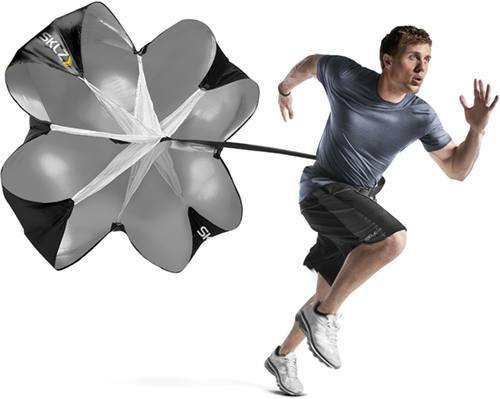
SKLZ Speed Parachute

Baseball Tool #2 - ARM STRENGTH

Just like speed, arm strength is another often overlooked tool in a baseball player's arsenal. As a position player, you may think that your arm strength "is what it is". So long as your throws are accurate, you don't give much extra thought into improving your velocity.
However, just as pitchers do, position players can also improve their velocity through many different exercises - or even just improving on your mechanics.
Having a strong arm can be the difference between gunning a runner down from the hole at shortstop, or letting another infield hit extend the inning.
First base is just about the only position on the diamond where you can hide a weak arm. Even second basemen need a certain amount of zip on the ball to turn double plays.
Our Favorite Resources For Arm Strength

SKLZ Weighted Baseballs
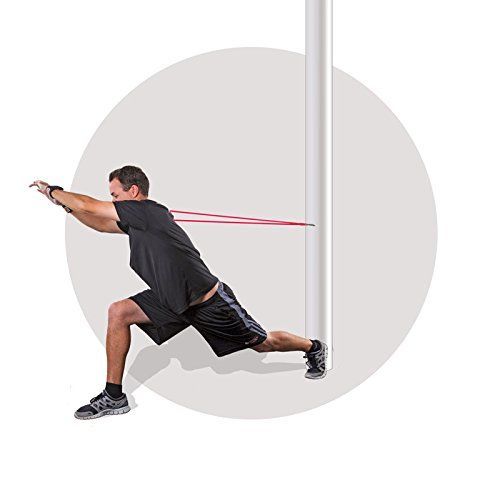
Jaeger Sports Arm Strength Bands
Baseball Tool #3 - FIELDING

Fielding your position well is KEY to having success on the baseball field, and being on a team that wins.
Let's not forget that baseball is a team sport.
So often, when writing about improving one's baseball skills, it can become easy to forget that you are just one of nine guys on the field pulling for the same goal. You have to do your job, so that everyone else can do theirs.
In all honesty, I'd rather have a guy on my team that plays great defense, than a guy who mashes homeruns. I've seen too many games blown, and thrown away, because of a few bad plays.
Plain and simple - you must work on your fielding constantly. There is never a time that you can rest, and feel comfortable with your abilities. Every day, you've got to be out there taking ground balls or shagging pop-flies. Every day.
Our Favorite Resources For Fielding

MacGregor Infield Training Glove
From Around The Web
Baseball Tool #4 - HITTING FOR AVERAGE

Hitting for average in baseball means that you are doing a few things right. Things like:
If you're checking each of these things off the list, it's almost impossible not to have a high average. But these things are easier said than done.
Even the best hitters in the game go through slumps. That's why you need to have consistency and trust in your batting approach. There are systems and tools out there to help you achieve that consistency. Hopefully, this site, is one of them.
Our Favorite Resources For Hitting for Average


SKLZ Power Stick


Tanner Tees
From Around The Web
Baseball Tool #5 - HITTING FOR POWER

The one you've been waiting for, right? I can't say I blame you. Homeruns are sexy. Power hitters get all the love (and media coverage). Personally, I've never hit for much power, and man, does it bother me sometimes. I'd love to know what it feels like to hit a ball like this:
Some people say that you can't teach power. But that's not true. In fact, I have an entire article on how to hit with more power.
And the more that I put these techniques into practice, the harder I'm starting to hit the ball. My goal is to hit one home run this season. Just one. I'll keep you posted.
Our Favorite Resources For Hitting for Power


Zepp 3D Baseball Swing Analyzer


SKLZ QuickSwing PX4
From Around The Web
What Are The Five Tools In Baseball?
A Re-Cap
Now that you know what the five tools are, it's time to go out and put them into action!
Be honest with yourself - what are you lacking? Some guys are freaks of nature and are born with these talents, but the rest of us have to fight for them. You can improve.
The resources listed here are meant to be a constantly updated list. If you have a suggestion for a training aid, or a workout, or a drill that helps develop any of these five tools, please leave a comment. I'm always on the lookout for the best information and tools available.
