Baseball Season is here! And that means it's time to be overly critical of every at bat, play in the field, and failed stolen base attempt. As part of a series of posts this summer, I'll be breaking down my own performance, and seeing what lessons I can take away from every game.
I play in a men's adult baseball league called the National Adult Baseball Association (NABA for short).
More...
Game 1 - Hitmen vs. Snappers (yes those are the names)
If you're anything like me, you're really hard on yourself - and that's okay. We get better by being hard on ourselves. It only becomes a problem if you don't view your shortcomings as opportunities to learn.
But you can't beat yourself up. With that said, watch me beat myself up...
Offensive Breakdown
AB | R | H | RBI | BB | SO | PA | BA | OBP | SLG | OPS |
|---|---|---|---|---|---|---|---|---|---|---|
4 | 1 | 2 | 1 | 0 | 2 | 4 | .500 | .500 | 1.000 | 1.500 |
Triple, Single, RBI and Run Scored.
This looks pretty good at first glance. And I'm happy with it, in general. But you will notice that I struck out twice during this game - once looking and once swinging. I really hate striking out - it's such a waste of an at bat. But it's going to happen.
When a strikeout is unacceptable
A strikeout is unacceptable when there are men on second and third with one out. That's an unacceptable strikeout.
In a situation like that you have one job: put the ball in play. Preferably in the air - the harder the better. It's a moment that many hitters relish because you basically have complete freedom to swing aggressively.
Let me set the scene for you...
It's the bottom of the sixth inning. I'm due up fourth, and the first two runners have reached base via walk. The pitcher is a little wild this inning, is what I'm thinking. There are no outs and the hitter in front of me is smart, and he plays a little small ball, laying down a bunt. It's successful and he advances the runners with the sacrifice.
Now we have runners on second and third with one out. Did I mention it's a tied game? They pull the infield in to cut off the go-ahead run.
Normally, I go up to the plate in this situation thinking "take a hack".
But because of the two walks I'm thinking, "I might not get anything good to hit, let's see if he can throw strikes."
The first pitch is absolutely mouth watering. It's up in zone, it's flat, and it's a mediocre fastball. And I take it for a called strike. LIKE AN IDIOT. That is exactly the type of pitch that I should have been gearing up for.
Now it's 0-1. No time to panic, I just need a good pitch to hit. So what's he throw me? A good curveball that I take for another strike. It was a good pitch, I'll admit that, but still one that I could have hit.
Okay, so now it's 0-2 and I haven't swung the bat. Now we're in bad territory.
Here's where things can go a little haywire when you're in your head too much at the plate. I've seen two pitches - probably the only two pitches that this guy has. What will he come with next?
I shouldn't even be making a guess, in this situation. Instead, I should be looking fastball and adjusting to anything offspeed, and I should be protecting the plate. That's what I should be doing.
But, no, I'm guessing instead - and I'm thinking he's going to waste a pitch to see if I'll chase. I'm specifically thinking that he's going to throw another curve down and off the plate. So that's where I'm cheating.
I have to give the pitcher credit. He played me like a fiddle and whatever wildness he had in the beginning of the inning was apparently gone. He comes back with a fastball right under my hands - inside, but still catching the plate. Because I was looking out over the plate for something offspeed, I can't adjust to fastball in...
I swing, but can't get the barrel to catch up. Strike three.

A wasted opportunity. Now there are two outs in the inning, the infield can move back, and we can't produce a run with an out. I don't even remember what the batter after me did, but he made an out. Inning over. Game still tied. The game ended in a tie, by the way.
What I learned, in the end...
- Don't try and guess pitches when you're down 0-2
- Don't overthink your at bats in general. See the ball, hit the ball.
- With runners on second and third with one out, be extremely aggressive. Had I attacked that first pitch, we probably score a run there.
There are still a lot of positives to take away from the game. For one, we only scored 3 runs in the game total - I was responsible for driving one of them in, and scoring another. That's good. That's what I will take with me as a positive into the next game.
Are you playing right now? What lessons have you learned along the way?

What I Learned: When is a Strikeout Unacceptable?
Baseball Season is here! And that means it's time to be overly critical of every at bat, play in the field, and failed stolen base attempt. As part of a series of posts this summer, I'll be breaking down my own performance, and seeing what lessons I can take away from every game.
I play in a men's adult baseball league called the National Adult Baseball Association (NABA for short).
More...
Game 1 - Hitmen vs. Snappers (yes those are the names)
If you're anything like me, you're really hard on yourself - and that's okay. We get better by being hard on ourselves. It only becomes a problem if you don't view your shortcomings as opportunities to learn.
But you can't beat yourself up. With that said, watch me beat myself up...
Offensive Breakdown
AB | R | H | RBI | BB | SO | PA | BA | OBP | SLG | OPS |
|---|---|---|---|---|---|---|---|---|---|---|
4 | 1 | 2 | 1 | 0 | 2 | 4 | .500 | .500 | 1.000 | 1.500 |
Triple, Single, RBI and Run Scored.
This looks pretty good at first glance. And I'm happy with it, in general. But you will notice that I struck out twice during this game - once looking and once swinging. I really hate striking out - it's such a waste of an at bat. But it's going to happen.
When a strikeout is unacceptable
A strikeout is unacceptable when there are men on second and third with one out. That's an unacceptable strikeout.
In a situation like that you have one job: put the ball in play. Preferably in the air - the harder the better. It's a moment that many hitters relish because you basically have complete freedom to swing aggressively.
Let me set the scene for you...
It's the bottom of the sixth inning. I'm due up fourth, and the first two runners have reached base via walk. The pitcher is a little wild this inning, is what I'm thinking. There are no outs and the hitter in front of me is smart, and he plays a little small ball, laying down a bunt. It's successful and he advances the runners with the sacrifice.
Now we have runners on second and third with one out. Did I mention it's a tied game? They pull the infield in to cut off the go-ahead run.
Normally, I go up to the plate in this situation thinking "take a hack".
But because of the two walks I'm thinking, "I might not get anything good to hit, let's see if he can throw strikes."
The first pitch is absolutely mouth watering. It's up in zone, it's flat, and it's a mediocre fastball. And I take it for a called strike. LIKE AN IDIOT. That is exactly the type of pitch that I should have been gearing up for.
Now it's 0-1. No time to panic, I just need a good pitch to hit. So what's he throw me? A good curveball that I take for another strike. It was a good pitch, I'll admit that, but still one that I could have hit.
Okay, so now it's 0-2 and I haven't swung the bat. Now we're in bad territory.
Here's where things can go a little haywire when you're in your head too much at the plate. I've seen two pitches - probably the only two pitches that this guy has. What will he come with next?
I shouldn't even be making a guess, in this situation. Instead, I should be looking fastball and adjusting to anything offspeed, and I should be protecting the plate. That's what I should be doing.
But, no, I'm guessing instead - and I'm thinking he's going to waste a pitch to see if I'll chase. I'm specifically thinking that he's going to throw another curve down and off the plate. So that's where I'm cheating.
I have to give the pitcher credit. He played me like a fiddle and whatever wildness he had in the beginning of the inning was apparently gone. He comes back with a fastball right under my hands - inside, but still catching the plate. Because I was looking out over the plate for something offspeed, I can't adjust to fastball in...
I swing, but can't get the barrel to catch up. Strike three.
A wasted opportunity. Now there are two outs in the inning, the infield can move back, and we can't produce a run with an out. I don't even remember what the batter after me did, but he made an out. Inning over. Game still tied. The game ended in a tie, by the way.
What I learned, in the end...
- Don't try and guess pitches when you're down 0-2
- Don't overthink your at bats in general. See the ball, hit the ball.
- With runners on second and third with one out, be extremely aggressive. Had I attacked that first pitch, we probably score a run there.
There are still a lot of positives to take away from the game. For one, we only scored 3 runs in the game total - I was responsible for driving one of them in, and scoring another. That's good. That's what I will take with me as a positive into the next game.
Are you playing right now? What lessons have you learned along the way?
editor's pick

latest video

news via inbox
Nulla turp dis cursus. Integer liberos euismod pretium faucibua
you might also like
- You must keep your hands inside the baseball. If you let your hands drift out (having a long swing), you're going to get jammed or you're going to pull the ball foul.
- You still have to be able to get your arms extended. This means that you need to hit the ball out in front of the plate.
- You need to clear your hips early. This is part of rotational hitting which is something that I will go into depth on in another article.
- First off, you need a good eye. There's high heat, and then there's "this ball is up around my eyes" heat. Don't swing at balls out of the zone.
- Get your front foot down early. You need to be able to react quickly once you recognize that the ball is up. If you're foot is down, you're ready to pounce
- Work on timing the pitcher's fastball in the on deck circle. Get a feel for his rhythm and adjust your load and swing accordingly.
- Keep your swing short. Check out the drill below from Dead Red Hitting to help work on this.
- Speed
- Arm Strength
- Fielding Ability
- Hitting for Average
- Hitting for Power
- Stealing a base (or two)
- Taking an extra base on a single to right field (when runner is on first)
- Rattling the pitcher
- Scoring from 1st on a double
- Drawing pick off throws which can get away
- Scoring on a passed ball
- Staying out of double plays
- Hitting the ball hard
- Making contact often (not striking out)
- Hitting the ball on a line
- Using the whole field
- Trust in your bat speed and ability to hit a good fastball
- Once again, don't overthink your at bats in general. See the ball, hit the ball.
- Go the other way, go the other way, go the other way!
You want to know how to hit a baseball with more power?
Well, before we do that, I'm just going to go ahead and leave this epic blast for your viewing pleasure. Take your time, watch this video, wipe the tears from your eyes, and then we'll get down to business.
It's a thing of beauty, the way Bonds turns on that pitch.
More...
And, yeah, I know, steroids etc... But I'm just going to pretend that those years in baseball when Bonds, McGuire, and Sosa were turning baseballs into dust, were just gifts from the Baseball Gods above.
But let's assume that you're not blessed with the pure swing of a Mike Trout - or the freak, once in a generation talent, of Bryce Harper (who was doing this when he was in High School).
What can you do to add some power to that swing of yours? Well, besides hitting the weight room, Here's a few tips to add a few feet to your tape measure shots.
Learn to Turn on an Inside Fastball
Dustin Pedroia is listed at 5'9" and 175 lbs. That's pretty small for a pro ball player. Yet in 2008, his MVP season, he slugged .493 with an OPS of .869 - so how does a guy that small hit with so much power?
Because he absolutely feasts on inside fastballs - especially ones that are up in the zone. Because of this, he is able to generate a lot of power to his pull side.
Take a look at the chart below. It shows the location of pitches where Pedroia is hitting for the most power (slugging). The trend is pretty clear.

This can be a really hard thing to do for a lot of people (myself included). But there are a few things to keep in mind when trying to accomplish this.
Catch Up with High Heat
They say when life gives you lemons, make lemonade. Well I say, when a pitcher gives you a high fastball, put it in the bleachers.
Pitchers hate to leave balls up in the zone - and for good reason, they get crushed. But sometimes pitchers get cocky and think that they can beat you up there with their velocity. This is where you make them pay.
Why is it easier to hit a baseball with more power when it is up in the zone? Because it allows your bat path to stay flatter, increasing your ability to hit the ball just under center, which generates a lot of power.
So how do you catch up with a high fastball?
Keep your Hands Back
A lot of younger players struggle with keeping their hands back during the "loading" phase of their swing. As they start to take their stride their hands will either drift forward, drop down, or do both.
The problem is that you've just drained a lot of power from your swing by doing this, not to mention probably shortened the amount of time that your bat will be on the same plane as the ball (which is key to making good, hard contact, consistently).
Antonelli Baseball breaks this idea down in the video below.
Stop Squishing the Bug
ATTENTION TEE BALL DADS: Please stop teaching your kids this.
I don't know who started this trend, but I remember playing Tee Ball and hearing this all the time.
I can understand why it's taught - sometimes kids don't understand the role that their lower half has in the baseball swing (although some kids will just get it naturally). So when you want to get a kid to use his hips more, you tell him "squish the bug" so that he'll open up during the swing.
Here's the problem. When you spin your foot like this, you wind up putting all of the weight on your back leg - and it never gets transferred forward. Transferring your weight forward and through the ball is HUGE in creating power and bat speed.
Are these guys "squishing the bug" at contact?


In fact, often times when a professional makes contact, their back foot isn't even on the ground, that's how much force is being driven through the baseball...


Rich at the Baseball Barn has a great video explaining these principles. Check it out below.
What about you guys? What other tips can you offer up to increase the power in your baseball swing? Post in the comments below.
More...
Maybe you've heard the term "Five Tool Player" before and wondered what that meant. Or maybe you know the term, but want to learn how to achieve that lofty title. When I was a kid, I remember the first time that I heard someone use it. I didn't know exactly what it meant, but I knew that I wanted to be one - a five tool player that is.
So, what are the five tools in baseball?
Simply put, the five tools are the categories that scouts use to break down a player's abilities on the field. If you rate highly across all five tools, you're known as a five tool player and you're showered with love and money. Yay!
It should be noted that this applies to position players mostly, and not pitchers. Pitchers have a different scale with which they are rated.
The Five Tools in Baseball Are:
This is what scouts are looking for in a player. Let's break each one down a little further and see how you can improve in these areas.
Baseball Tool #1 - SPEED

In my opinion, Speed is one of the more underrated skills to have in baseball. It's always the home runs and fancy web-gems that get all the glory, but when you've got a speedy runner on the base paths, they can affect the outcome of the game in 100 different ways.
Here are a few of the ways that a fast runner can change a game:
The list goes on, but you get the point.
One important thing to mention here, is that, while we are referring to this tool as "speed", it also encompasses base running in general. There are plenty of guys that aren't breaking any records in the 40 yard dash, but still grade high in this tool based on their intelligence on the base paths.
Players such as Dustin Pedroia and Ryan Zimmerman are not very fast, but Pedroia has the uncanny ability to read the ball off the bat, take an extra base when he sees an opportunity, and steal the occasional base on lazy pitchers who have forgotten about him.
Zimmerman, although not very fast, ranks among the fastest players in the league for taking an extra base.
Our Favorite Resources For Speed
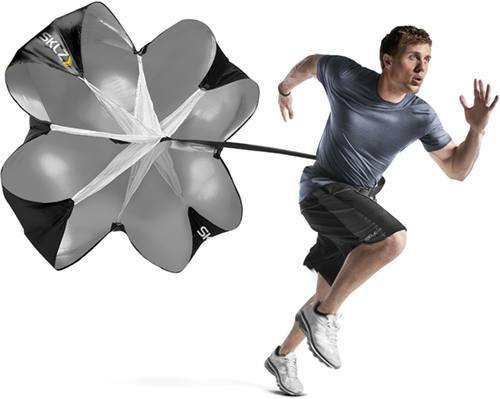
SKLZ Speed Parachute

Baseball Tool #2 - ARM STRENGTH

Just like speed, arm strength is another often overlooked tool in a baseball player's arsenal. As a position player, you may think that your arm strength "is what it is". So long as your throws are accurate, you don't give much extra thought into improving your velocity.
However, just as pitchers do, position players can also improve their velocity through many different exercises - or even just improving on your mechanics.
Having a strong arm can be the difference between gunning a runner down from the hole at shortstop, or letting another infield hit extend the inning.
First base is just about the only position on the diamond where you can hide a weak arm. Even second basemen need a certain amount of zip on the ball to turn double plays.
Our Favorite Resources For Arm Strength

SKLZ Weighted Baseballs
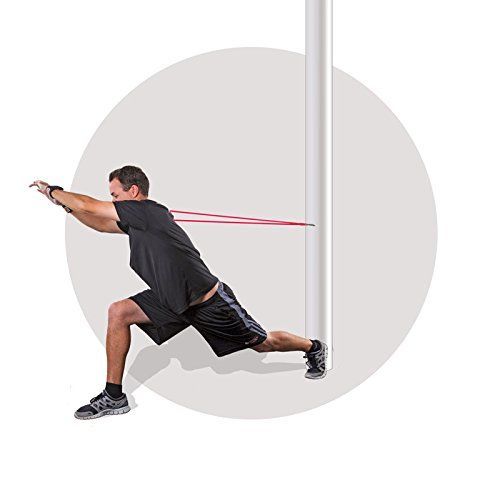
Jaeger Sports Arm Strength Bands
Baseball Tool #3 - FIELDING

Fielding your position well is KEY to having success on the baseball field, and being on a team that wins.
Let's not forget that baseball is a team sport.
So often, when writing about improving one's baseball skills, it can become easy to forget that you are just one of nine guys on the field pulling for the same goal. You have to do your job, so that everyone else can do theirs.
In all honesty, I'd rather have a guy on my team that plays great defense, than a guy who mashes homeruns. I've seen too many games blown, and thrown away, because of a few bad plays.
Plain and simple - you must work on your fielding constantly. There is never a time that you can rest, and feel comfortable with your abilities. Every day, you've got to be out there taking ground balls or shagging pop-flies. Every day.
Our Favorite Resources For Fielding

MacGregor Infield Training Glove

From Around The Web
Baseball Tool #4 - HITTING FOR AVERAGE

Hitting for average in baseball means that you are doing a few things right. Things like:
If you're checking each of these things off the list, it's almost impossible not to have a high average. But these things are easier said than done.
Even the best hitters in the game go through slumps. That's why you need to have consistency and trust in your batting approach. There are systems and tools out there to help you achieve that consistency. Hopefully, this site, is one of them.
Our Favorite Resources For Hitting for Average


SKLZ Power Stick


Tanner Tees
From Around The Web
Baseball Tool #5 - HITTING FOR POWER

The one you've been waiting for, right? I can't say I blame you. Homeruns are sexy. Power hitters get all the love (and media coverage). Personally, I've never hit for much power, and man, does it bother me sometimes. I'd love to know what it feels like to hit a ball like this:
Some people say that you can't teach power. But that's not true. In fact, I have an entire article on how to hit with more power.
And the more that I put these techniques into practice, the harder I'm starting to hit the ball. My goal is to hit one home run this season. Just one. I'll keep you posted.
Our Favorite Resources For Hitting for Power


Zepp 3D Baseball Swing Analyzer


SKLZ QuickSwing PX4
From Around The Web
What Are The Five Tools In Baseball?
A Re-Cap
Now that you know what the five tools are, it's time to go out and put them into action!
Be honest with yourself - what are you lacking? Some guys are freaks of nature and are born with these talents, but the rest of us have to fight for them. You can improve.
The resources listed here are meant to be a constantly updated list. If you have a suggestion for a training aid, or a workout, or a drill that helps develop any of these five tools, please leave a comment. I'm always on the lookout for the best information and tools available.
Baseball Season is here! And that means it's time to be overly critical of every at bat, play in the field, and failed stolen base attempt. As part of a series of posts this summer, I'll be breaking down my own performance, and seeing what lessons I can take away from every game.
I play in a men's adult baseball league called the National Adult Baseball Association (NABA for short).
More...
Game 2 - Hitmen vs. Aces (yes those are the names)
If you're anything like me, you're really hard on yourself - and that's okay. We get better by being hard on ourselves. It only becomes a problem if you don't view your shortcomings as opportunities to learn.
But you can't beat yourself up. With that said, watch me beat myself up...
Offensive Breakdown
AB | R | H | RBI | BB | SO | PA | BA | OBP | SLG | OPS |
|---|---|---|---|---|---|---|---|---|---|---|
3 | 1 | 0 | 0 | 1 | 2 | 4 | .286 | .375 | .571 | .946 |
2 Ks, a Walk, and a Pop Up. Not a great day.
What's up with the Strikeouts?
If you've been following along thus far in my season, you'll notice that this is the second game in a row where I've struck out twice.
No one likes striking out. Especially me, because I pride myself on being a contact hitter and I don't have the type of power (or any, really) that will allow for strikeouts to be acceptable.
So how did I get myself into trouble this time around? How did a good contact hitter like myself strikeout twice in one game?
Velocity Changes Everything, That's Why
We happened to be facing a few pitchers on this particular day that threw hard (hard for the league I'm in at least) - mid to high eighties, probably.
It's a hittable speed, honestly. And I don't say that to sound tough, but you can still time an eighty mph fastball even with just average bat speed. But you have to recognize the pitch early. That's where the problem lies.
When you start getting in your head about your ability to catch up with a fastball, you start to cheat rather than let the pitch come to you, see it, and react.
I Always Like to Take a Strike
It's the leadoff hitter in me. I always like to see a strike before I will swing at anything. That's a fine approach when you have good contact skills, because you don't have to worry all that much about being down two strikes. You can always foul off pitches until you get one you like.
But, it can sometimes put you behind in the count right away. And that's what was happening today. Good fastballs down the middle to start at bats. Pitches that I could have been aggressive on.
So now that I'm behind in the count, I get a little less aggressive, and also a little more paranoid about that fastball. which means...
I'm Now Susceptible to Offspeed Pitches
And that's exactly what I strike out on. I see a pitch that looks like a fastball out of the pitchers hand, and it's right down the middle. I start my swing early only to realize that, wait, that's not a fastball. It's a curveball and it's heading down and away.
I'm way out in front of the pitch and I can't adjust my swing in time. Strike three.
It's the same thing with a change up, but even worse, because those really look like fastballs coming out of the pitcher's hand because the arm speed is usually the same.
All I really needed to do is relax and not fear the fastball. I can catch up with it. I don't need to cheat and start my swing early. Lesson learned (hopefully)

A Quick Note About My Popup
How did good velocity effect this at bat?
I was trying to pull everything that's how. This tends to happen to me early in the season. I forget that hitting the ball the other way is completely acceptable and actually preferred in many cases.
The problem is that when you try to pull a good fastball, you'd better be sure that you can catch up to it. In this case, I couldn't.
So when I think I'm going to hit it off the barrell, it's actually too fast for that, making contact with the handle instead.
Hence, a week pop up to the infield.
Velocity done messed with me today. It got in my head and toyed with me.
What I learned, in the end...
Are you playing right now? What lessons have you learned along the way?
